How to Choose the Right Gold Plating Thickness for Connectors
Gold plating is widely used on electrical connector contacts because of its excellent corrosion resistance, stable electrical performance, and resistance to oxidation.
However, choosing gold plating for a connector is not simply a matter of selecting the thickest gold layer available.
A thicker gold layer can provide better wear resistance, but it also increases manufacturing cost. For this reason, the right plating thickness should be determined by the connector's application, mating frequency, operating environment, contact design, and reliability requirements.
So, how do you choose the right gold plating thickness for a connector?
This guide explains the key factors engineers and purchasing teams should consider.
The contact surface of a connector must maintain reliable electrical contact throughout its service life.
Gold plating provides several important advantages:
Excellent corrosion resistance
Good resistance to oxidation
Stable electrical contact
Improved wear resistance
Long-term contact reliability
However, the performance of a gold-plated contact does not depend on gold thickness alone.
The contact material, nickel underplating, gold hardness, contact force, connector design, mating cycles, and plating quality can all affect the final performance.
Therefore, gold thickness should always be considered as part of the complete contact system.
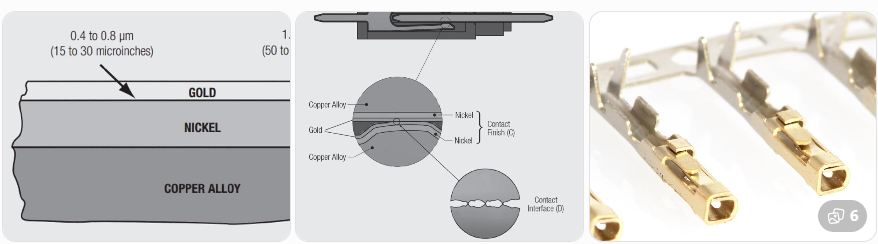
Figure 1. Gold plating thickness is only one part of connector contact performance.
Different connector applications may use different gold plating specifications.
The following table provides a general reference:
| Gold Plating | Approx. Thickness | Typical Consideration |
|---|---|---|
| Gold Flash | Usually below 0.25 µm | Low-wear and cost-sensitive applications |
| 3–10 µ″ | Approx. 0.08–0.25 µm | General-purpose applications |
| 15 µ″ | Approx. 0.38 µm | Moderate wear and reliability requirements |
| 30 µ″ | Approx. 0.76 µm | Higher wear resistance and reliability |
| 50 µ″+ | Approx. 1.27 µm+ | More demanding applications |
These ranges should be treated as general engineering references rather than universal standards.
The actual specification should be determined according to the connector design, application requirements, mating cycles, environment, and applicable customer or industry specifications.
One of the first questions to ask is:
How many times will the connector be mated and unmated during its service life?
Every mating cycle creates mechanical movement between the contact surfaces.
This movement can gradually wear the plating. If the gold layer becomes too thin for the application, the underlying nickel or base material may eventually become exposed.
For connectors that are assembled once and rarely disconnected, a thin gold layer or gold flash may be sufficient depending on the environment and electrical requirements.
Typical examples include:
Internal electronic equipment
Fixed PCB connections
Low-service-frequency devices
If the connector will be disconnected and reconnected periodically, a thicker gold layer may provide better wear resistance.
Examples include:
Industrial equipment
Control systems
Communication equipment
Test equipment
For applications involving frequent mating cycles, the contact system requires much greater attention to wear resistance.
In these situations, engineers may consider thicker gold plating and, depending on the application, hard gold plating systems.
However, gold thickness alone should not be used to predict mating life.
The connector's contact force, contact geometry, wiping distance, gold hardness, base material, and plating process are also important.
The environment in which the connector operates can significantly affect plating requirements.
For example, connectors used in a clean indoor environment may have very different requirements from connectors exposed to:
High humidity
Temperature changes
Industrial contaminants
Corrosive gases
Dust
Outdoor conditions
Gold itself has excellent resistance to oxidation and corrosion, which is one reason it is widely used for electrical contacts.
However, the complete plating system matters.
A typical contact may include:
Base Material → Nickel Underplating → Gold Plating
The nickel layer can provide an important barrier between the base material and the gold surface.
Therefore, when evaluating connector plating, it is better to consider the complete plating structure, rather than looking only at the gold thickness.
Two connectors with the same gold thickness can have different contact performance.
Why?
Because the mechanical design of the contact also matters.
Important factors include:
Contact force affects how firmly two contact surfaces remain together.
The shape of the terminal determines how the contact surfaces interact during mating.
During mating, the contact surfaces may slide against each other.
This wiping action can remove surface contamination, but it also creates mechanical wear.
Copper alloys, phosphor bronze, brass, and other materials may have different mechanical and electrical properties.
Therefore:
A gold plating specification should be evaluated together with the contact design and material system.
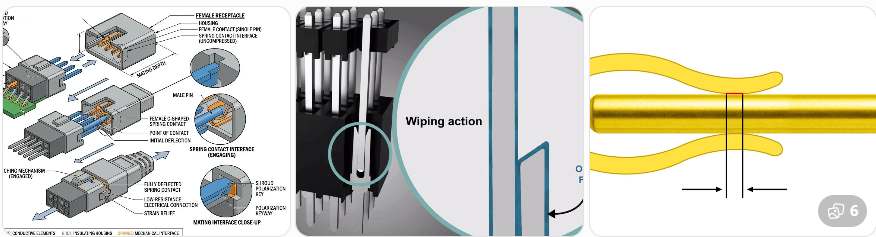
Figure 2. Mating cycles, contact force and wiping action all influence contact wear.
Not every connector has the same reliability requirements.
A connector inside a consumer electronic product may have very different requirements from one used in industrial automation or communication equipment.
When selecting plating thickness, consider:
Required service life
Electrical stability
Mating cycles
Environmental conditions
Maintenance requirements
Consequences of contact failure
For higher-reliability applications, customers may specify minimum gold thickness, nickel thickness, material requirements, or specific plating standards.
In these situations, the customer's specification should always take priority over a general recommendation.
A common question is:
Should I choose gold flash or thicker gold plating?
There is no universal answer.
Gold flash is often considered when:
Mating cycles are low
The connector operates in a controlled environment
Cost is an important consideration
Long-term mechanical wear is limited
Thicker gold plating may be considered when:
Mating cycles are higher
Greater wear resistance is required
Contact reliability is more critical
The connector operates in a more demanding environment
The important point is:
More gold does not automatically mean a better connector.
The goal is to select sufficient plating performance for the actual application.
The following examples provide a starting point for discussion.
| Application | Typical Consideration |
|---|---|
| Consumer electronics | Gold flash / thin gold |
| General PCB connectors | Gold flash / thin gold |
| Industrial control | 15 µ″ / 30 µ″ or application-specific |
| Communication equipment | 15 µ″ / 30 µ″ or application-specific |
| Frequently mated connectors | Thicker gold / hard gold depending on design |
| High-reliability applications | Application-specific specification |
These are general guidelines only.
The correct plating specification should be confirmed based on the connector's actual working conditions and performance requirements.
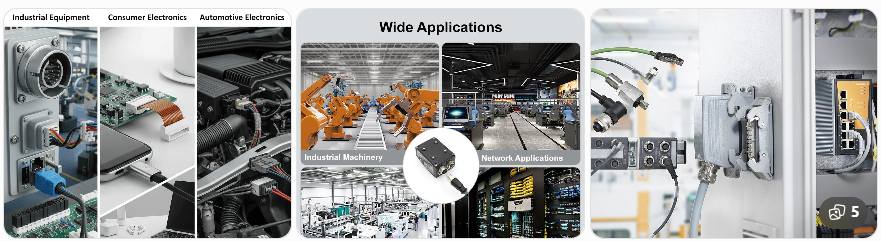
Figure 3. Gold plating requirements can vary significantly between different applications.
One of the most common mistakes is to compare connectors only by gold thickness.
For example:
Connector A: 30 µ″ gold
Connector B: 15 µ″ gold
It may be tempting to assume that Connector A will always perform twice as well.
In reality, connector reliability is much more complicated.
Engineers should also consider:
Base material
Nickel underplating
Gold hardness
Contact force
Contact geometry
Wiping action
Plating process
Surface quality
Manufacturing consistency
Operating environment
This is why an experienced connector manufacturer should evaluate the complete contact system, rather than simply recommending the thickest available gold layer.
Gold is a valuable material, so plating thickness has a direct impact on manufacturing cost.
Increasing the gold thickness means using more precious metal and may increase the overall cost of the connector.
For high-volume products, even a small increase in plating thickness can have a significant effect on total purchasing cost.
For example, if a connector contains thousands or millions of contacts, the difference between a thin gold layer and a substantially thicker layer can become commercially important.
Therefore, the objective should not be:
"Use the thickest gold possible."
Instead, the objective should be:
"Use the appropriate gold thickness for the required performance."
This approach can help balance:
Reliability + Service Life + Performance + Cost
When evaluating a new connector project, we recommend starting with these four questions:
Low, moderate, or high?
Indoor, industrial, humid, outdoor, or corrosive?
General-purpose or high-reliability?
Is the application highly cost-sensitive, or is reliability the primary consideration?
Once these factors are understood, the appropriate plating range can be evaluated.
Choosing the correct gold plating specification can sometimes be difficult, especially when a connector is being developed for a new application.
If you have a connector drawing or technical specification, the following information can help determine an appropriate plating solution:
Connector type
Contact material
Required mating cycles
Operating environment
Gold thickness requirement
Nickel underplating requirement
Electrical requirements
Target quantity
Target cost
At ZYSZ INDUSTRY, we work with customers on connector development, tooling, stamping, plating, injection molding, assembly, and quality control.
If you are unsure whether your connector requires gold flash, 15 µ″, 30 µ″, or a thicker gold specification, send us your drawing and application requirements.
Our team can help evaluate a suitable plating specification based on the actual application.
There is no single gold plating thickness that is suitable for every connector.
The right choice depends on:
Mating Cycles + Operating Environment + Contact Design + Reliability Requirements + Cost
Gold flash may be appropriate for some low-wear applications, while thicker gold plating may be necessary when greater wear resistance and reliability are required.
Most importantly, gold thickness should be evaluated as part of the complete connector contact system—not as an isolated number.
Choosing the right plating specification can help achieve the right balance between performance, reliability, service life, and cost.
Contact: Steven
Phone: +86 18026591840
E-mail: biz@zyszindustry.com
Whatsapp:+86 13798308364
Add: B601/608, Building 4,Mingrenju Industrial Park,Shatian, Kengzi,Pingshan,Shenzhen, Guangdong, 518122